

Road resurfacing schemes are now getting under way across Bath and North East Somerset as part of a £5 million council investment in highway improvements for 2026.
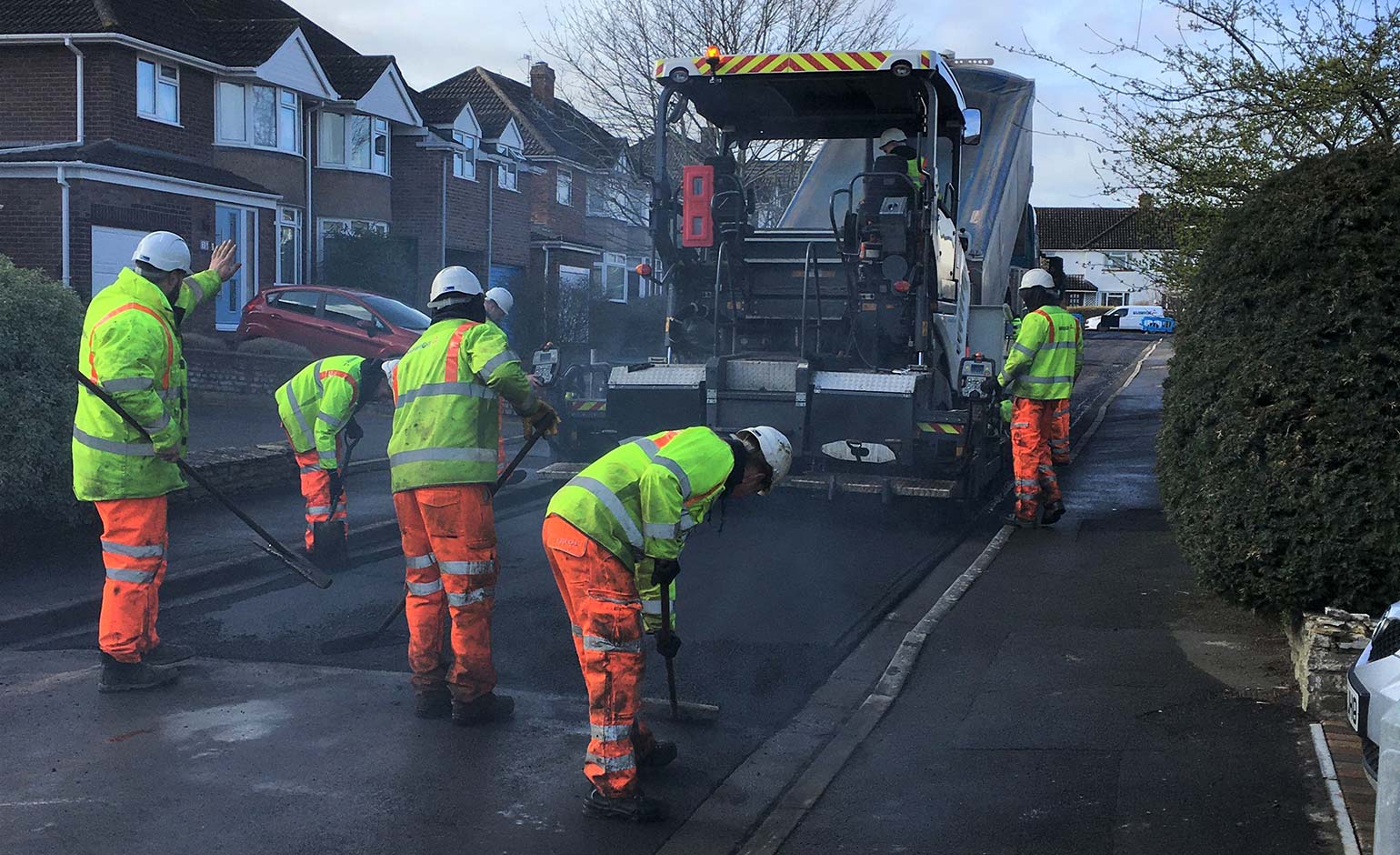
Library image | Photo © B&NES Council
The programme will run from now until the end of the summer, with the work scheduled to take place before colder and wetter conditions make resurfacing harder to complete.
Alongside the £5 million being spent on roads, Bath & North East Somerset Council is also putting £950,000 into resurfacing footways.
Further maintenance and improvement work is also being carried out on other parts of the network, including street lights, drains, bridges and public rights of way.
Councillor Lucy Hodge, cabinet member for sustainable transport delivery, said the condition of the road network remained a key issue for residents and said the council was continuing to address it through both larger planned schemes and reactive repairs.
She said: “Keeping our roads in good condition is one of the things residents rightly expect from us, and we are committed to delivering it through planned programmes like this as well as smaller reactive work our teams are out doing each day, like fixing potholes and carrying out inspections.
“Potholes can form quickly during winter with wet and cold spells, which has a big impact on road surfaces. Our highways teams have been working flat out fixing potholes, with 3,790 repaired in since January, a five-year high.”
The council said its work on highway maintenance was recently ranked fourth out of 111 local authorities in the National Highways and Transport Network Satisfaction Survey, up from 11th place the previous year.
It added that lower-carbon methods are continuing to be used in resurfacing projects. Two schemes last year were completed using in-situ recycling, which reuses the existing road material, while a carbon-neutral trial was also carried out in Whitchurch.
This year, £600,000 is being allocated to four micro-asphalt schemes, which the council says produce fewer carbon emissions than traditional resurfacing.
Roads are selected for resurfacing through surveys and inspections, while residents can also flag problems through FixMyStreet.
The council said newly resurfaced roads will also be protected by Section 58 restrictions, helping limit certain utility works for up to three years.