

Public Health England (PHE) has launched the Act F.A.S.T. stroke campaign in the South West, which urges the public to call 999 if they notice even one of the signs of a stroke in themselves, or in others.
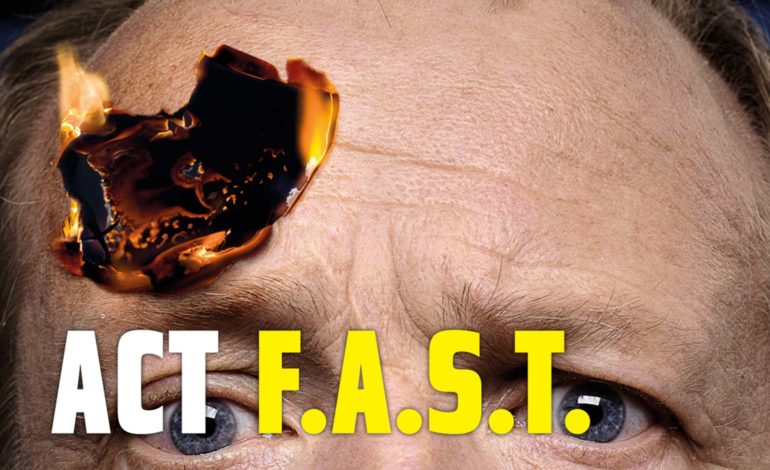
The signs of a stroke include:
- Face – has their face fallen on one side? Can they smile?
- Arms – can they raise both their arms and keep them there?
- Speech – is their speech slurred?
- Time – time to call 999
In England, one in six people will have a stroke in their lifetime. Current figures show there are over 122,500 people on GP registers in South West who have had a stroke, and in 2016 almost 4,000 people died from a stroke.
It is estimated that around 30% of people who have a stroke will experience another stroke.
Stroke is the third most common cause of premature death, and a leading cause of disability in the UK.
There are around 32,000 stroke related deaths in England each year. Deaths related to stroke have declined by 49% in the past 15 years. This has been accredited to a combination of better prevention, earlier treatment and more advanced treatment.
Getting an NHS Health Check, for those aged 40-74 years, can identify early if you are at risk of a stroke.
While the majority (59%) of strokes occur in the older generation, PHE’s figures also found that over a third (38%) of first time strokes happen in middle aged adults (between the ages of 40 – 69).
More first time strokes are now occurring at an earlier age compared to a decade ago. The average age for males having a stroke fell from 71 to 68 years and for females, 75 to 73 years between 2007 and 2016.
Awareness is crucial, so the campaign reaches out to people of all ages to highlight the risk of stroke and reiterates the signs and how vital it is that people call 999 and get to hospital as soon as possible.
Around 1.9 million nerve cells in the brain are lost every minute that a stroke is left untreated, which can result in slurred speech and paralysis. If left untreated, a stroke can result in permanent disability or death.
The Stroke Association’s latest State of the Nation report reveals that in the UK almost two thirds (65%) of stroke survivors leave hospital with a disability. Around three quarters of stroke survivors have arm or leg weakness, around 60% have visual problems and around a half have difficulty swallowing and loss of bladder control. Communication is also affected in around a third of stroke survivors.
Debbie Stark, Deputy Centre Director for Public Health England South West said: “We know that sadly, far too many people dismiss their early warning signs of stroke and delay calling 999. Stroke is a medical emergency and getting the right treatment fast can save lives.
Through this latest campaign we hope as many people as possible know how to act FAST and help reduce the devastating impact a stroke can have.
Paul Leyland, 58, from Wellington in Somerset suffered a stroke in 2012: “In 2012, I had a stroke whilst on holiday in Cornwall and now I’m encouraging people to learn to recognise the signs of stroke in themselves and others.
“I’d been enjoying the last day of the holiday with my family when I decided to stop off at a supermarket for a cooked breakfast. Something in my head registered that I was having a stroke as I recognised the signs from the Act F.A.S.T. TV ad.
“I could feel a wave of numbness moving from my head down, and weakness spreading inside my body and became very unsteady. I couldn’t imagine what else it could have been.
“Fortunately, my family were able to help me to the supermarket, where staff called 999 for an ambulance and I was rushed to hospital within an hour.
“Initially, my vision and emotions were severely affected, and I was left with numbness down the left-hand side of my body, some of which continues today.
“But with support from Headway Somerset I have rebuilt my life, and in many ways feel fitter than I did before the stroke: walking twice a day and doing yoga. I have also been able to return to my career in film and as an artist and have worked with a support group to help others affected by stroke.”
Tony Rudd, National Clinical Director for Stroke with NHS England and stroke physician at Guy’s and St Thomas’ NHS Foundation Trust, commented: “Thanks to improved NHS care, stroke survival is now at record high levels. Urgent treatment for strokes is essential, so friends and family can play a key part in making sure their loved ones receive care as quickly as possible.
“Every minute counts and knowing when to call 999 – if you see any one of the signs of stroke – will make a significant difference to someone’s recovery and rehabilitation.”
Steve Brine MP, Parliamentary Under Secretary of State for Public Health and Primary Care, said: “Strokes still claim thousands of lives each year, so the message of this Act FAST campaign remains as relevant as ever. The faster you act, the greater the chance of a good recovery.
“That’s why I’m urging everybody, and we must remember stroke can hit at any age, to familiarise themselves with the signs of a stroke and be ready to act fast.”
The F.A.S.T. (Face, Arms, Speech, Time) acronym has featured in the advertising for a number of years and is a simple test to help people identify the most common signs of a stroke.