

The controversial community-led renewable energy project in the Batheaston area has this week been dropped.
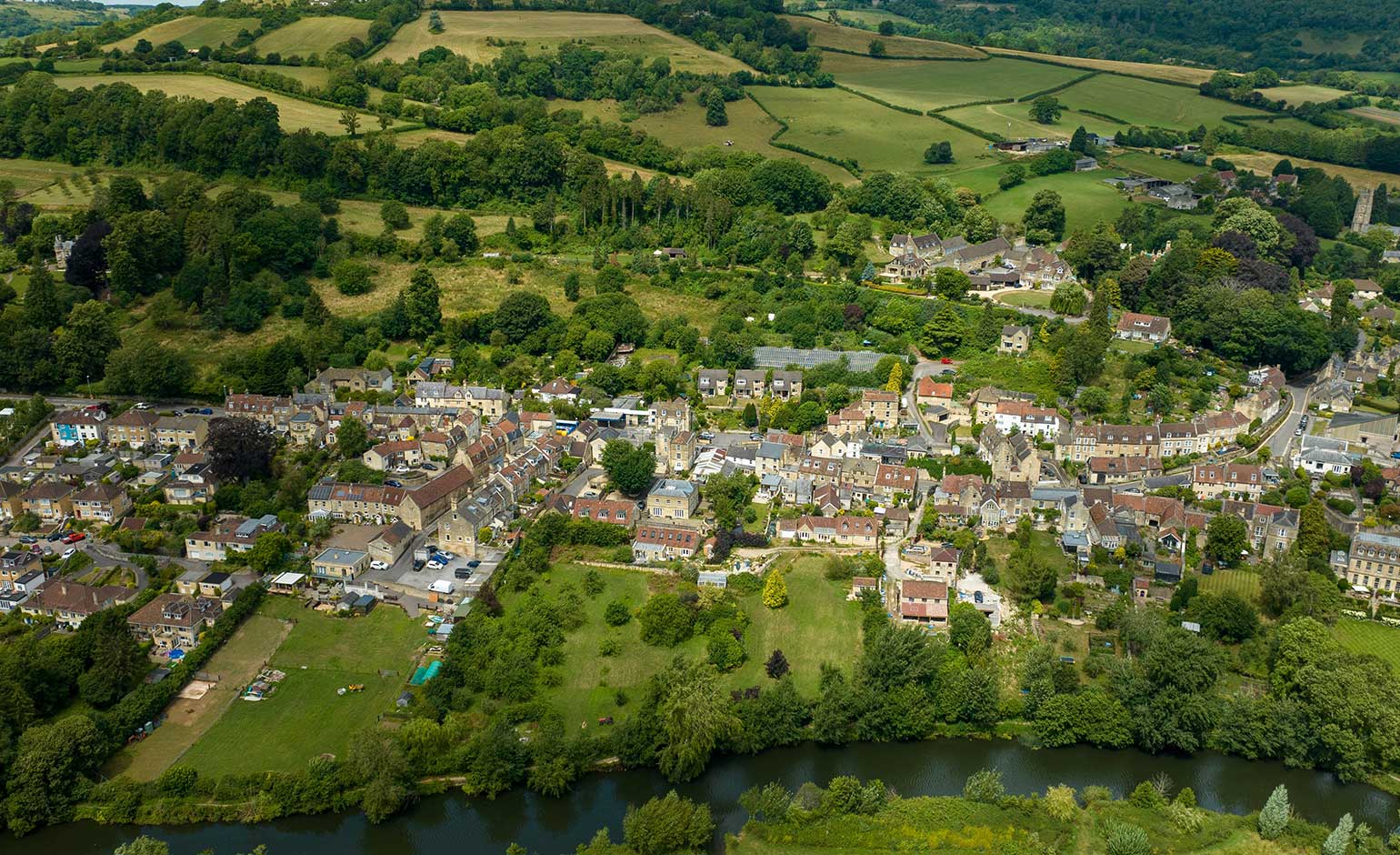
Land around Batheaston | Photo © Colin Peachey / Shutterstock.com
Earlier this month, the Echo reported on a public meeting attended by more than 100 people which was called after a map revealed 30 potential locations for solar farms and 10 wind turbines in the parishes of Batheaston and St Catherine.
Key details were missing – including that the area is in the Cotswolds National Landscape and Green Belt, as well as inside the Bath World Heritage Site.
Also missing was the Charmy Down site of geological significance, nature conservation areas, topography and notable landmarks including Solsbury Hill, as well as the water source protection zone.
This week, the Community Energy Network partnership revealed that the Energy in Your Community (EiYC) project had been halted – and Bath & North East Somerset Council’s cabinet member for sustainable energy admitted that “lessons have been learnt” from the way the process was handled.
The network is a partnership of B&NES Council, Bath & West Community Energy (BWCE), the Centre for Sustainable Energy (CSE), University of Bath and the Community Wellbeing Hub to support local action on energy.
The aim is to support 5MW of community-owned renewable generation across the district by 2030.
A workshop was held on 3rd February as part of the EiYC project after St Catherine Parish Meeting, Batheaston Parish Council and Grow Batheaston applied to take part in it.
The project uses an approach called Future Energy Landscapes, developed by CSE, to help communities discuss possible locations for renewable energy. The process is designed to start conversations with communities at a very early stage, before any renewable energy proposals are developed.
In a statement, the Community Energy Network said: “In every community we work with, people care deeply about the landscapes where they live. Listening to everyone’s views is the central purpose of this engagement process.
“After the first workshop, a number of concerns were raised locally. A key concern, raised by residents, related to the map used during the workshop.
“The map was intended as a discussion tool to explore where renewable energy might or might not be suitable. However, we recognise that it could have appeared to show proposals for renewable energy sites. Whilst this was not the case, this understandably caused concern.
“In light of the concerns raised locally and the feedback we received following the workshop, CSE will not be continuing their community-led Future Energy Landscapes process in Batheaston and St Catherine.
“It should be noted that halting this community-led process does not prevent renewable energy developers from submitting proposals through the normal planning process.
“As part of their ongoing practice of learning from community engagement, CSE will reflect on the feedback received about how discussion materials are introduced.
“In addition to the concerns that were raised about renewable energy, many residents expressed strong support for the principle of clean, local, affordable energy, and for tackling climate change.
“The Community Energy Network works widely across Bath and North East Somerset, including supporting residents with home energy advice through the Energy at Home project.
“Over the coming weeks the Community Energy Network and local groups will continue to reflect on the feedback received and explore what forms of local energy or climate action might have broad support in the area. Further communications and activities will follow, pending the outcome of these conversations.”
Councillor Sarah Warren, Liberal Democrat cabinet member for Sustainable Bath and North East Somerset and a ward councillor for Bathavon North, which includes Batheaston, said: “B&NES Council remains fully supportive of the development of renewable energy capacity in the right places, and welcomes the support of partners CSE and Bath & West Community Energy (BWCE) in facilitating community discussions to explore where these might be.
“We acknowledge that parts of the process in Batheaston didn’t go exactly as we would have wished, and lessons have been learnt by all partners.
“It is unfortunate that we have only been able to hear from a small number of residents in Batheaston and St Catherine to date. Given the strength of views expressed by some so early in the process, we felt that it would not be practical to continue the EiYC discussions in this area at this time.
“We hope very much that the local organisations who initiated the EiYC process will not be put off from taking forward further energy-based community discussions locally in partnership with BWCE and CSE.
“These might encompass support for residents with making their homes more energy efficient in the first instance, whilst continuing to raise awareness of the positive possibilities of renewable and community energy appropriately located in the local area.”